
Back to Wildlife Control
Bat removal & exclusion

Bat removal in Brampton, Toronto and the GTA.

Bat removal is quoted after an inspection rather than priced over the phone, because a single bat in a bedroom and a roost in the attic are two different jobs. A wildlife inspection costs $100–$150 plus 13% HST and requires roof access. Sterex contains and releases single bats, and clears roosts by exclusion — one-way exits, confirmation the roost is empty, then sealing every opening. Bats are protected in Ontario, so timing matters: openings are sealed from October to March, or once nothing is roosting inside. Wildlife work carries a 3-month warranty on the area and protection Sterex serviced.

Ontario wildlife removal rules
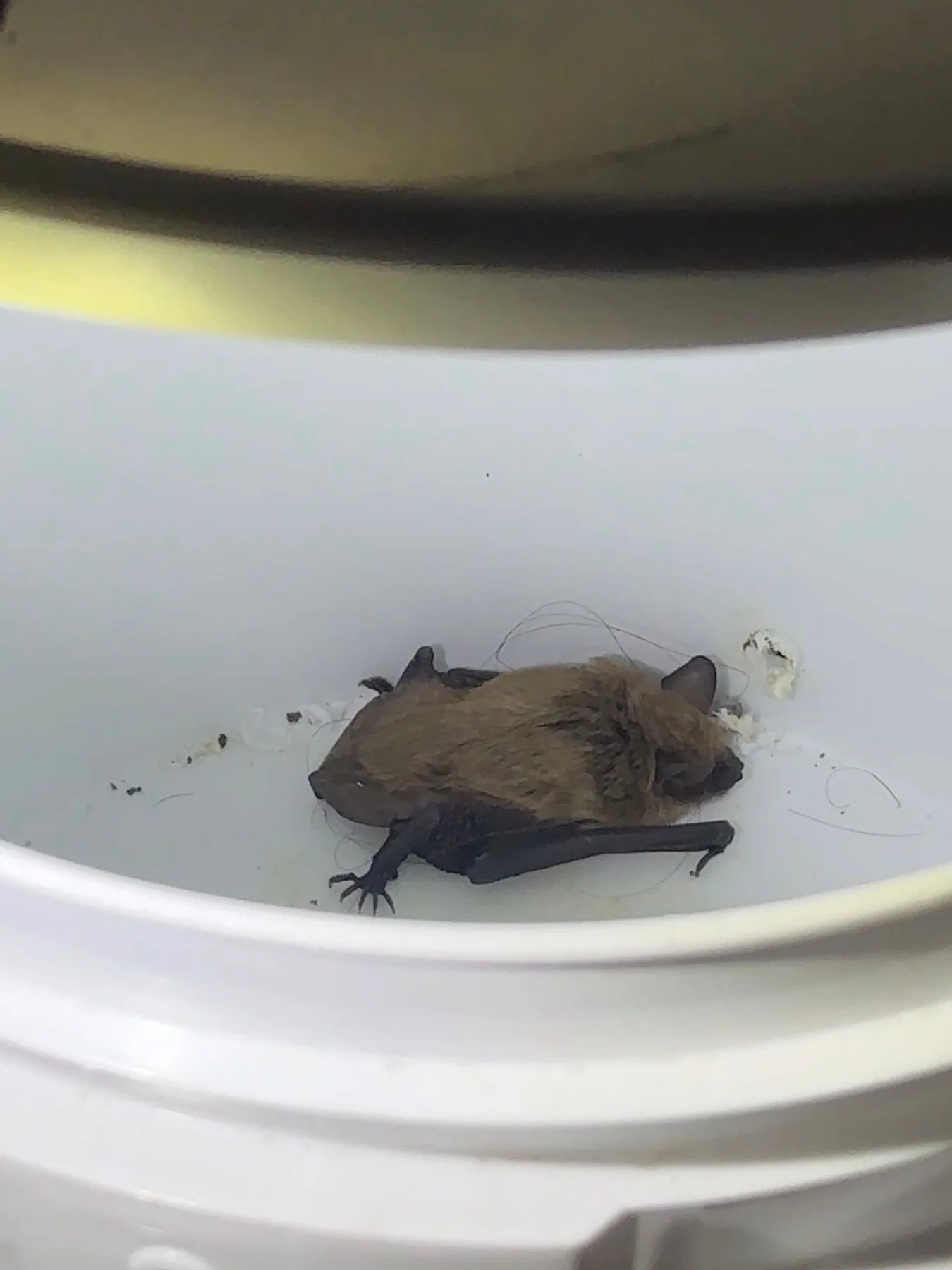
Bat contained in a pail after humane removal from a Brampton home

Contained, not handled — a Brampton job

Our own photo from the job. The bat goes into a covered pail rather than a gloved hand: nobody touches a possible rabies carrier, the animal is not injured being grabbed, and it can be carried out and released in one movement.

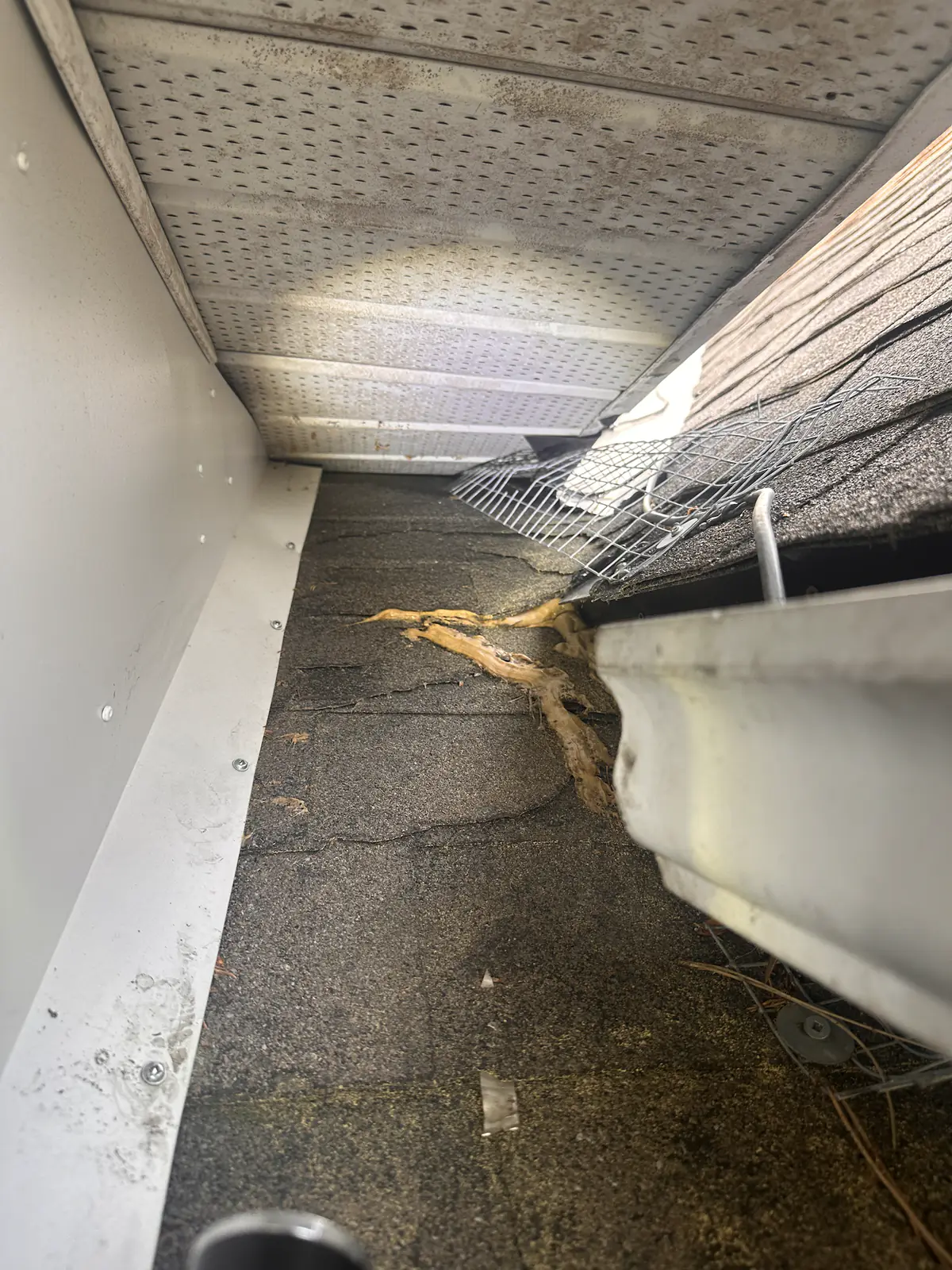
Open seam along a roof edge between the shingle line and the soffit, with exclusion mesh being fitted into the gap
A roof-edge seam between the shingle line and the soffit return, being closed with exclusion mesh on a Sterex job. This is the shape of opening bat work deals with — a seam, not a chewed hole.

Sterex on the roof

You are looking for a seam, not a hole

This is the single biggest difference between a bat job and a raccoon or squirrel job. A raccoon tears an opening you can see from the driveway. A squirrel leaves a chewed hole with fresh wood around it. Bats need neither, because they are not making an opening at all — they are using one the building already has.

A gap about the width of a finger is enough. That is why bat entry points are found at the places two materials meet and have moved apart over the years: the shingle edge and the soffit return, a lifted ridge cap, flashing at a chimney, the seam where a dormer runs into a wall. Nothing about them looks like damage, which is why they get walked past — and why this part of the inspection is done from a ladder rather than from the ground.

It is also why sealing is the whole job rather than the last step. Close four openings and miss the fifth, and the colony simply resumes through the one that is left.

Two different calls

One bat in the house, or a roost in the roof

Almost every bat call in the GTA is one of these two, and they need opposite responses. Telling them apart on the phone is what decides whether you need someone out tonight or a proper roofline inspection.

A single bat inside the living space

It came down a chimney, in through a door left open on a summer evening, or—most often in a family home—dropped out of a roost already above the ceiling. The Ontario government’s own advice is to leave it alone first, open a window, and give it a reasonable amount of time to leave on its own. If it will not, that is when you call someone to contain and release it.

  • Close the interior doors so it stays in one room
  • Open an exterior window or door wide and stand clear
  • Do not swat at it, and do not try to catch it bare-handed
  • Keep children and pets out of the room entirely

A roost in the attic, wall or soffit

A colony returns to the same building year after year and can sit in a roof for a long time before anyone notices. This one is never solved by catching animals. It is solved by letting the colony leave through one-way exits, confirming the roost is empty, and then closing every opening it was using.

  • Droppings building in one spot below the roofline
  • Ammonia smell upstairs that worsens in hot weather
  • Noise in a wall or ceiling at dusk and before dawn
  • Bats leaving the same roof point at sunset on consecutive nights

If a bat was in a room with someone sleeping, do not let it go

This is the part of a bat call that matters more than the bat. A bat bite can be small enough to go unnoticed, so Peel Public Health assesses any situation where the person cannot reliably say whether contact happened — which includes an adult who was asleep, a young child, or anyone unable to report what occurred. In those cases the bat needs to be contained and kept for testing rather than released.

Ontario’s guidance is to wear gloves and protective clothing around a bat, to warn children to stay away and report any contact, and to contact your doctor or veterinarian if you or a pet comes into direct contact with one. Tell us on the phone if any of this applies to your call, and the bat is retained instead of released.

Peel Public Health

905-799-7700

Sterex

289-210-7378

Peel Public Health serves Brampton, Mississauga and Caledon. If you are in Toronto, Vaughan, Markham or elsewhere in the GTA, contact your own local public health unit.

Ontario rules and timing

Why bat work is exclusion, and why the calendar decides it

Bats are the most regulated animal Sterex is called about, and the most easily killed by a job done in the wrong month. Both of those come down to the same two facts.

They are protected, and some are endangered

Ontario is explicit that endangered and threatened bat species cannot be harassed, captured or killed unless the landowner enters into an agreement with the ministry. The little brown myotis, northern myotis and tri-colored bat are all listed as endangered after white-nose syndrome collapsed their populations. A homeowner looking up at a roofline cannot tell which species is using it, which is why the honest approach is to treat every roost as a protected one and exclude rather than destroy.

Sealing in the wrong month kills the colony

Through the summer a maternity roost holds pups that cannot yet fly. Close the opening then and the mothers are locked out while the young starve inside a wall — and the smell and the cleanup that follow are the homeowner’s problem for months. Ontario’s guidance is to seal the openings bats use from October to March, when bats are hibernating elsewhere, or once you are certain nothing is roosting in the building.

What that looks like across a year

April to early May

Workable. The colony is back but pups are not born yet, so a roost can be excluded and sealed cleanly.

Late May to mid-August

Do not seal. Flightless pups are in the roost. Inspection, planning and quoting happen now; the exclusion waits.

Mid-September to March

The main window. Young are flying, the colony disperses, and Ontario's own advice is to seal from October to March.

A single bat loose in a room is not affected by any of this and can be dealt with the same day. The calendar governs roost exclusion and sealing. Read the Ontario wildlife removal guide before anyone opens up a roost.

How Sterex handles a bat call

01

Find out which job it is

One bat in a living room and a maternity roost in the attic are not the same call. The inspection settles it: droppings under the ridge or gable, staining at a fascia junction, or a single animal that came down a chimney. What we find decides everything after this.

02

Get the animal out without handling it

A single bat is contained and released outside. A roost is not caught at all — the colony leaves on its own through one-way exits fitted over the openings it already uses, which is the only humane way to clear a group of bats from a structure.

03

Wait until the roost is genuinely empty

Exits stay on until the activity stops. Sealing a roost early is the single worst outcome in this work — it traps animals inside a wall where they die, and through the summer it traps flightless pups while their mothers are outside feeding.

04

Seal every gap, not just the obvious one

Bats use openings a finger would fit through, and a building rarely has only one. Ridge caps, gable vents, chimney flashing, fascia and soffit junctions and gaps behind siding all get closed, because a roost that finds one opening still open simply resumes.

Why there is no price on this page

Sterex publishes fixed prices wherever it honestly can — $450 for raccoon removal, $350 for squirrels, $300 for birds. Bats are the exception, and quoting one online would mean quoting the wrong number. A single animal released from a bedroom and a roost that needs a full roofline sealed are not comparable jobs, and how the roof is reached changes the work as much as the bats do. The honest version is a $100–$150 inspection that produces a real figure, not an estimate designed to get someone in the door.

Book a bat inspection
Roughly 1.5 by 2 centimetres

Where bats actually get into a GTA house

A bat needs a gap about the width of a finger — smaller than a squirrel needs, and far smaller than most people are looking for. There is no chewed hole to find, which is why bat entry points get missed and why this part of the job is done from a ladder rather than from the ground.

Ridge caps and roof peaks

The lifted edge of a ridge cap is the classic southern Ontario bat entry. It is high, warm, sheltered, and almost never visible from the ground.

Gable and attic vents

Louvred vents with failed or missing screening let bats straight into the attic. The vent looks fine from the driveway; the screen behind it is gone.

Chimney and flashing gaps

The joint where a chimney meets the roof deck opens up as flashing lifts, and an uncapped chimney is an open shaft into the house.

Fascia and soffit junctions

Where the fascia board meets the soffit return, and where a garage roof runs into the main wall, gaps open as the wood moves. Both are common roost entries.

Behind siding and trim

Bats roost in the cavity behind loose siding, shutters and trim boards without ever entering the attic, which is why an attic that looks clean does not rule bats out.

Dormer and wall junctions

Anywhere two roof planes meet a wall there is a seam. These are checked on every bat inspection because they are easy to miss and easy to use.

Signs of a bat roost

  • •Droppings piled in one spot below the ridge, a gable vent or a fascia junction — bats use the same exit nightly, so the pile builds in a single place
  • •A strong ammonia smell in the upper floor or attic that gets worse in hot weather
  • •Dark greasy staining around a small opening high on the roofline, left by fur passing through the same gap
  • •Chirping, squeaking or scratching in a wall or ceiling at dusk and again before dawn
  • •Bats seen leaving the same point of the roofline around sunset on consecutive evenings
  • •A single bat flying inside the house, which in a family home is often a pup that dropped out of a roost above

What a roost does to the building

Bats do not gnaw, so a bat problem never looks like a squirrel problem. Nothing is chewed and no wiring is stripped. The damage is accumulation, and it is slow enough that a roost can sit above a bedroom ceiling for years before the ceiling shows it.

  • •Guano and urine building up in one spot, soaking and flattening insulation until it stops insulating
  • •Staining that eventually comes through drywall on the ceiling or the upper wall below the roost
  • •A strong ammonia smell through the top floor that gets much worse in summer heat
  • •Dust released from dried droppings when the deposit is disturbed, which is why cleanup is contained rather than swept
  • •Bat bugs and mites that move down into living space once a roost is cleared but not cleaned

Keeping bats out afterwards

Bats are loyal to a roost and will return to the same building for years. Sealing is not the last step of the job — it is the job.

Close the openings properly

  • Seal ridge caps, gable vents, chimney flashing and fascia-to-soffit junctions
  • Screen every attic and gable vent, and check the screening behind louvres rather than the louvres
  • Cap open chimneys so nothing drops straight into the house
  • Close gaps behind loose siding, trim and shutters, where bats roost without ever entering the attic

Keep the roofline checkable

  • Look for a single growing pile of droppings below the roofline each spring
  • Watch the roof at sunset for a few evenings if you suspect activity — bats leave from the same point
  • Repair lifted flashing and moving fascia boards before the gap is wide enough to matter
  • Have the roofline inspected after any roofing, siding or soffit work, which routinely reopens old gaps

Bat removal FAQ

How much does bat removal cost in Brampton?

Bat work is quoted after an inspection rather than priced over the phone, because the cost depends on whether it is a single bat inside the living space or a roost in the attic, how the roofline is reached, how many entry points are open, and how much sealing the building needs. A wildlife inspection costs $100–$150 plus 13% HST and requires roof access. Call 289-210-7378 and Sterex will tell you which of the two it sounds like before anyone comes out.

How do you get a bat out of a house?

For a single bat in a room, the Ontario government's own advice is to leave the bat alone, open a window or door, and give it a reasonable amount of time to find its own way out. If that does not work, it advises calling pest control experts who can humanely capture and release bats. That is what Sterex does: the bat is contained in a covered pail rather than handled bare-handed, and released outside. Do not try to catch it yourself — handling is where people get bitten.

Are bats protected in Ontario?

Yes. Ontario's endangered and threatened bat species cannot be harassed, captured or killed unless the landowner enters into an agreement with the ministry, and the little brown myotis, northern myotis and tri-colored bat are all listed as endangered. In practice this is why bat work is exclusion rather than extermination, and why the timing matters. Review the Ontario wildlife removal guide before anyone touches a roost.

When can bats be removed from an attic in Ontario?

Timing decides whether the job is humane or fatal. Through the summer a maternity roost holds flightless pups, so sealing the opening walls them in while the mothers are outside feeding. Ontario's guidance is to seal the openings bats use from October to March, when bats are hibernating elsewhere, or once you are certain nothing is roosting in the building. In practice that means the workable windows are early spring before pups are born, and from mid-September once the young are flying.

What should I do if a bat was in the bedroom while someone was sleeping?

Treat it as a possible rabies exposure and do not let the bat go. A bat bite can be too small to notice, so Peel Public Health assesses any case where the person cannot reliably say whether contact happened — which includes a sleeping adult, a young child, or someone unable to report. Contact your doctor and Peel Public Health at 905-799-7700 right away, and keep the bat contained so it can be tested. Tell Sterex on the phone if this applies, because the bat is retained instead of released.

Do bats in the attic cause damage?

Bats do not gnaw the way squirrels and raccoons do, so the damage is accumulation rather than structural. A roost drops guano and urine in the same spot for years, which soaks insulation, stains drywall and ceilings below, and smells strongly in warm weather. Dried guano also releases dust when disturbed, which is why cleanup is done deliberately and not by sweeping it out.

How small a gap can a bat get through?

About the width of a finger. A bat can use an opening roughly 1.5 by 2 centimetres, which is smaller than anything a squirrel or raccoon needs and far smaller than most homeowners are looking for. That is why bat entry points are usually found at ridge caps, gable vents, chimney flashing, fascia and soffit junctions and gaps behind siding rather than at an obvious chewed hole.

Will bats come back after they are removed?

They will if the openings are still there, because bats are strongly loyal to a roost and return to the same building year after year. Getting the animals out is the short part; what actually ends the problem is sealing every gap they were using once the roost is confirmed empty. Wildlife work carries a 3-month warranty on the area and protection Sterex serviced.

Bat in the house, or bats in the roof?

Sterex handles bat removal and exclusion for homes across Brampton, Toronto, Mississauga, Vaughan, Markham and the wider GTA. Tell us what you have seen and heard on the phone — a single animal and an established roost get very different answers.

Last updated: