
Digital reports
GorillaDesk reports create a timestamped record of visit dates, services completed, activity notes, and recommendations.
Sterex supports restaurants, warehouses, offices, condos, malls, plazas, industrial sites, multi-unit buildings, and property management groups across Brampton, Toronto, Mississauga, and the GTA. The program is practical: routine visits, clear reporting, proper products, and escalation when activity changes.
Commercial credibility
Active property management experience, including RIOCAN-style reporting and recurring account work.

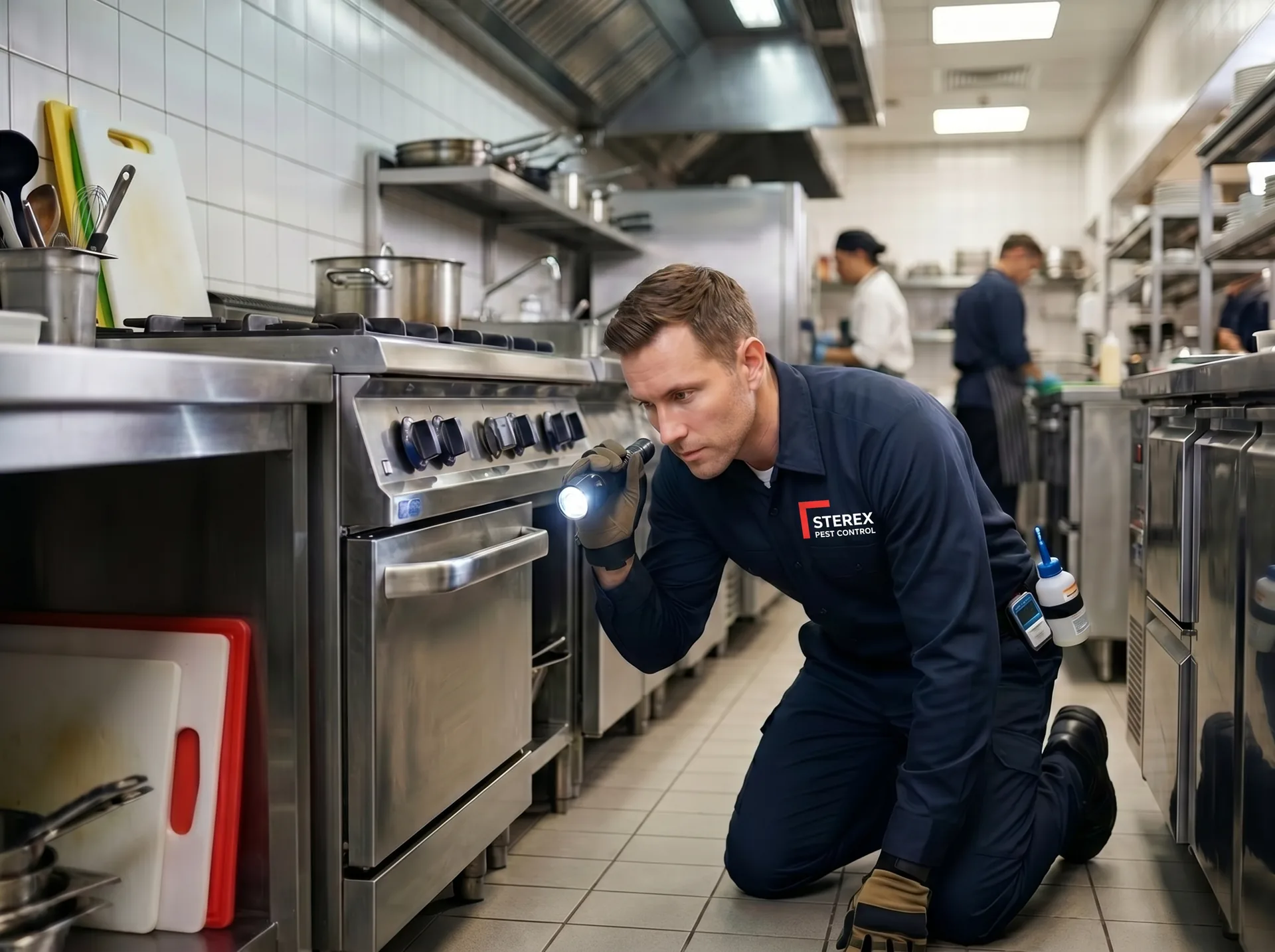
Sterex arrives prepared for the site: exterior perimeter work, interior monitoring, tenant coordination, and escalation when activity changes. The goal is consistent documentation and practical treatment—not a one-size-fits-all spray.
A monthly commercial visit should not be described as one oversized treatment. It should be a reliable routine: inspect, monitor, treat targeted zones, document findings, and escalate to heavier methods only when the site needs it.
GorillaDesk reports create a timestamped record of visit dates, services completed, activity notes, and recommendations.
Routine service may use Dragnet spray, Bion, dusting, bait stations, and other commercial materials based on site conditions.
Actisol is available for deeper crack or void treatment, but it is used when the issue calls for it, not as a blanket monthly claim.
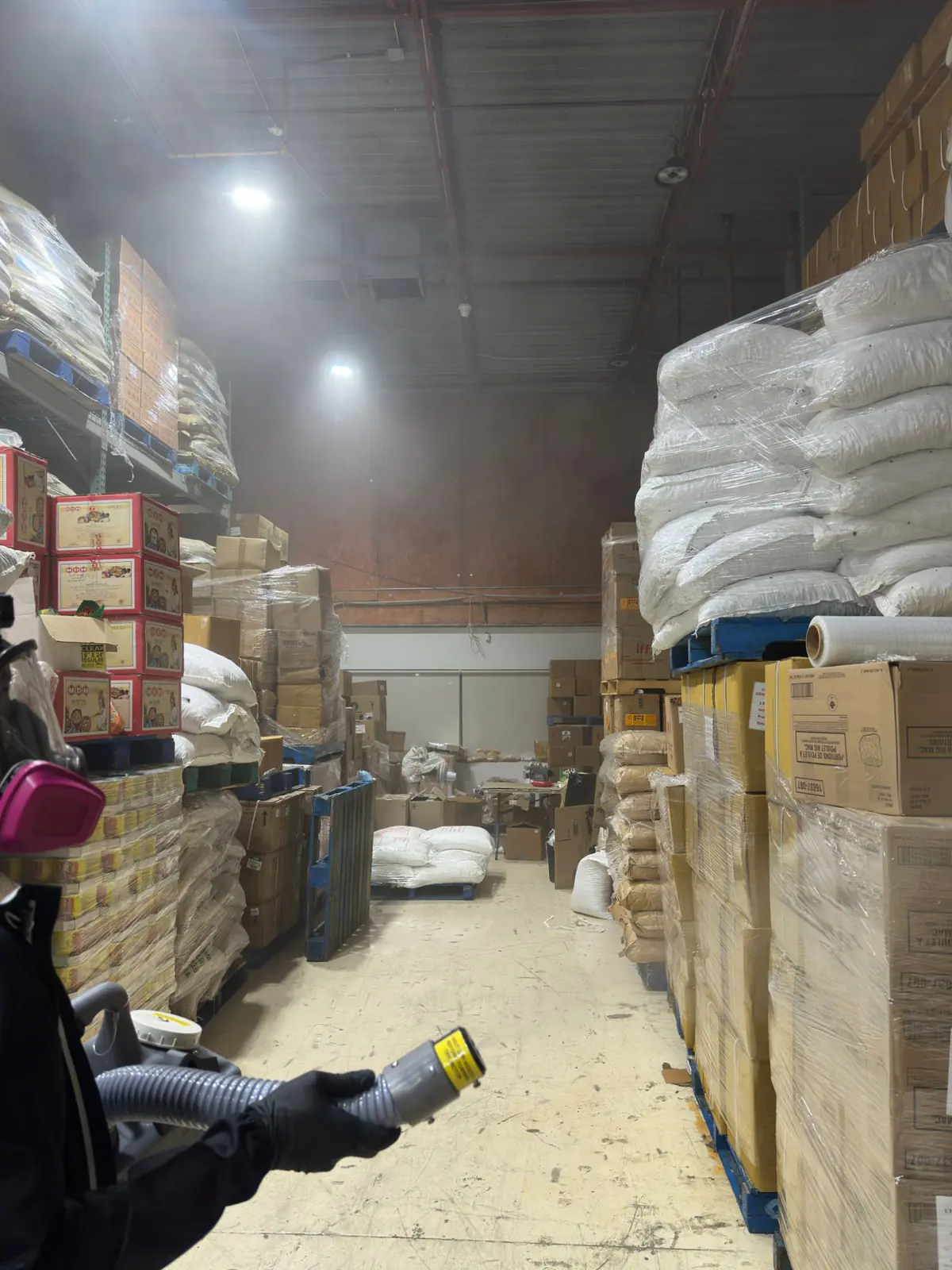
A GTA food storage warehouse called Sterex about an insect problem the staff could not identify. They knew they had flies moving through the racking and around palletized dry goods, but not what kind or where they were breeding. Identification came first: our technician confirmed what the insect actually was before anything was applied.
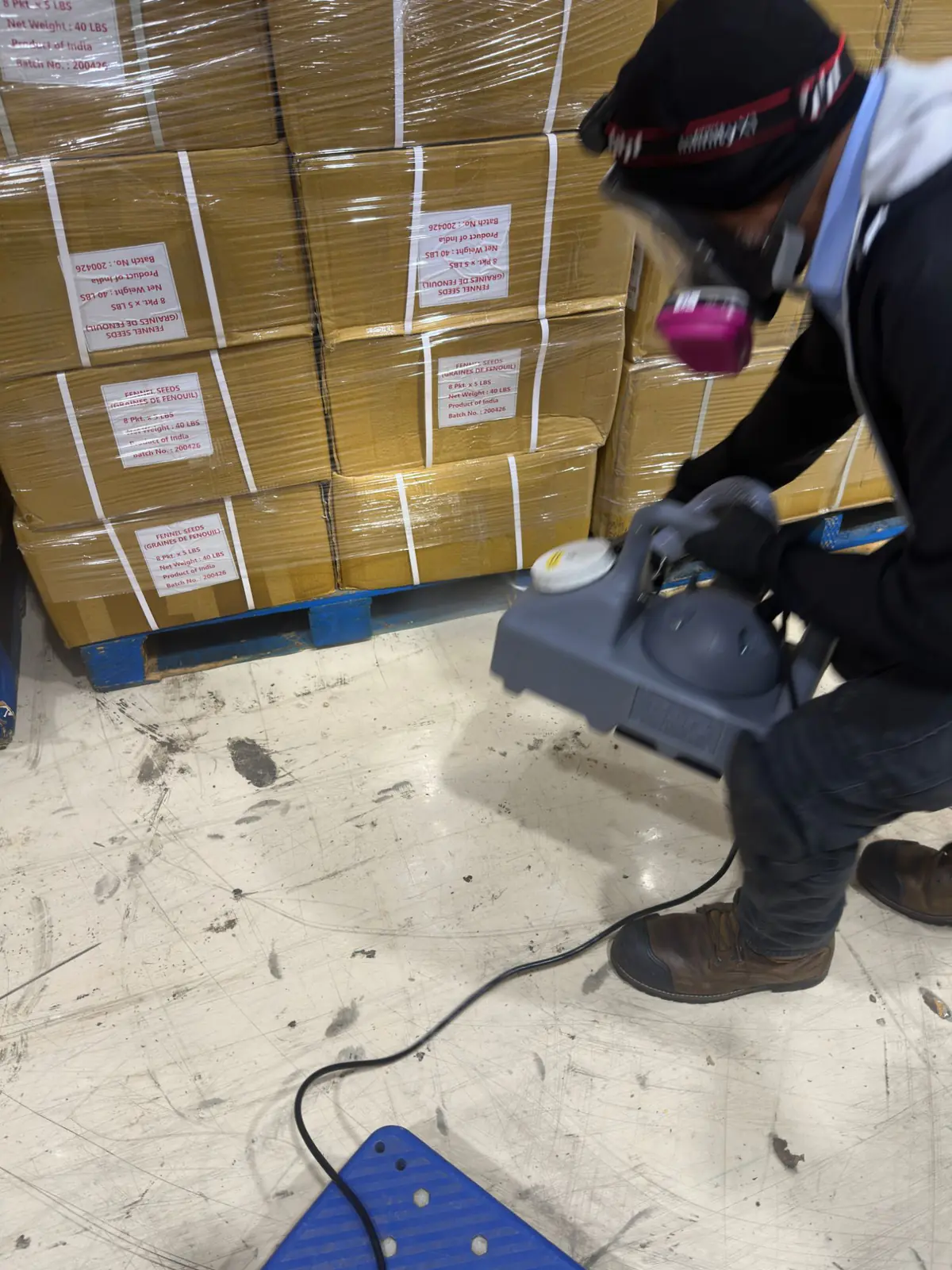
Once it was identified, the building was treated with ULV fogging. Fogging suits a space like this because a warehouse is mostly open volume and racked product, and flying insects sit in the air and on surfaces a spray wand never reaches. The fog is dispersed through the aisles and allowed to settle, with the technician in full respirator and face shield and the space cleared and ventilated before staff return.
A fly problem in a food facility is a breeding-site problem. Knowing the species is what tells you where to look — drains, spillage under racking, damaged product, or something arriving on a pallet.
ULV fogging puts a fine aerosol through open warehouse space and racking aisles, reaching flying insects and surfaces that spot treatment misses.
The visit is recorded in a GorillaDesk report with findings and recommendations, so the site has a timestamped record and a clear list of what to correct.
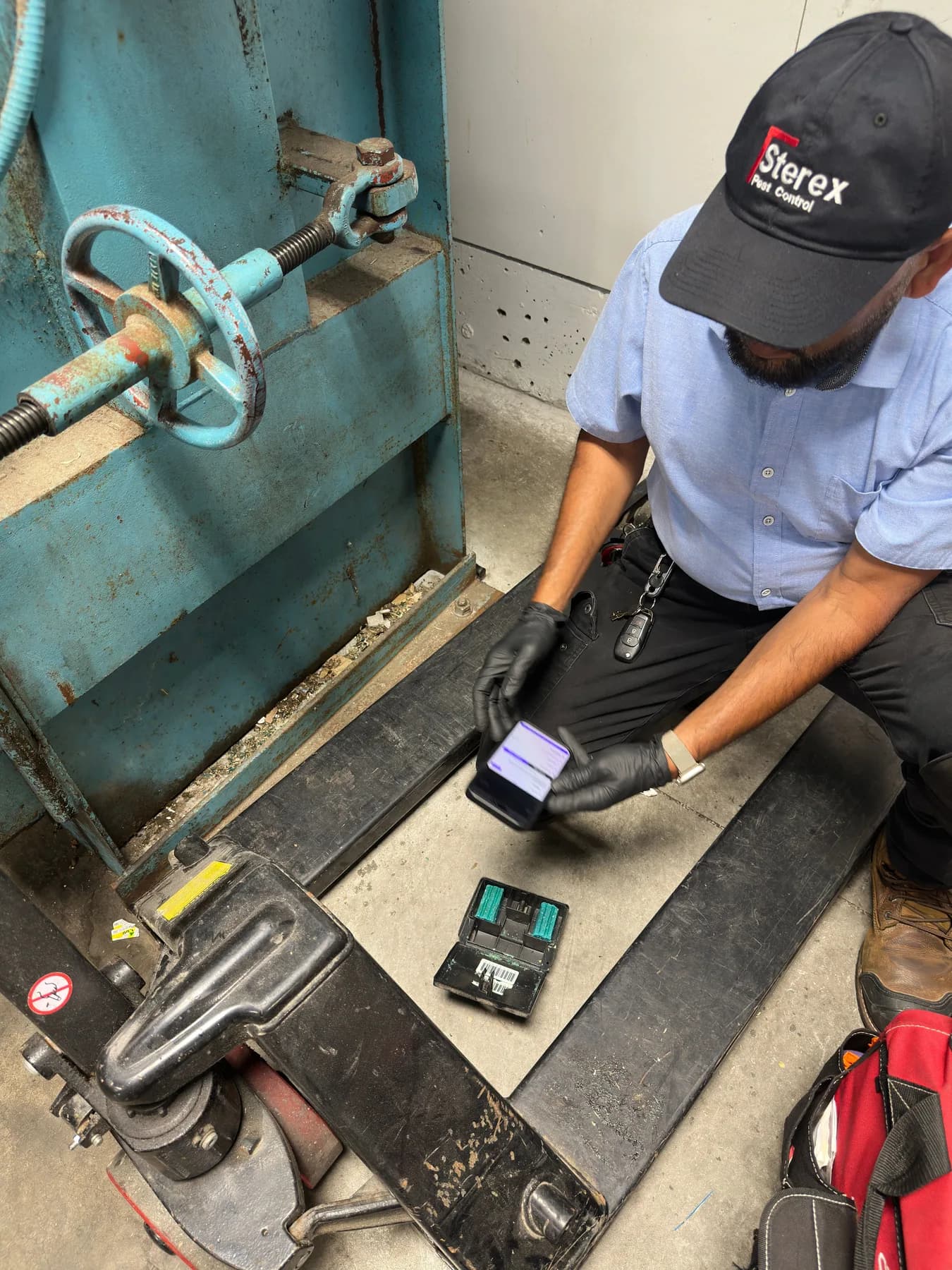
On a commercial site, the compactor bay is usually where rodent pressure starts. It concentrates food waste, it is warm, it has gaps under the unit and along the pad, and it sits beside a door that spends much of the day open. A program that treats the inside of the building and ignores the waste area is treating the symptom.
Exterior stations are placed along that pressure line and serviced on a schedule. Each one is opened, checked, rebaited where needed, and logged at the station rather than written up afterwards from memory, so the record shows what was found at each device instead of only that somebody attended.
Stations follow the route rodents actually take — compactor pad, dock edge, and the gaps under and behind the unit — rather than being spaced evenly around a building for the look of coverage.
Recording each station individually is what turns a service visit into trend data. A station that keeps taking bait tells you where the harbourage is.
Food premises and multi-tenant buildings get inspected. A per-station service history with dates and findings is what an auditor asks for.
Routine visits, cockroach and rodent monitoring, fly light service, and after-hours escalation when needed.
View programRodent bait stations, perimeter checks, loading-area monitoring, and storage-zone recommendations.
View programCommon-area service, in-suite treatments, block treatment planning, and property manager reporting.
View programLarge-site programs for plazas, food courts, tenants, common areas, and recurring service routes.
View programFacility-wide monitoring, exterior programs, rodent control, and practical exclusion recommendations.
View programRIOCAN-style account support with digital records, recurring visits, and clear communication.
View programJump to the vertical that matches your operation. Each program includes routine visits, documented reporting, and escalation when pest pressure changes.
Restaurant pest pressure is rarely a one-time problem. Grease buildup, delivery doors, dish pits, and floor drains create harbourage that cockroaches and flies exploit quickly. Many kitchens start with reactive monthly cleanouts—heavy treatments after activity spikes—because the root monitoring and exclusion work was never consistent.
Sterex builds restaurant programs around routine inspection, targeted monitoring, and escalation only when activity changes. Accounts that follow the schedule often move from frequent emergency cleanouts to a predictable annual rhythm: fewer surprise visits, cleaner health-inspection records, and less risk of bad reviews tied to visible pest activity.
Property managers inherit pest complaints from every building in the portfolio—mice in garbage rooms, rats near loading docks, bed bugs moving between suites. The fix is rarely a single spray. Sterex starts with structural and hygiene identification: where rodents travel, what food or harbourage sustains them, and whether bait stations are placed where activity actually occurs.
Recurring property management accounts receive documented visit notes, bait station tracking, and clear escalation paths when tenant reports spike. That documentation helps managers answer board questions, respond to tenant requests, and keep multiple buildings on a consistent program instead of one-off emergency calls.
Warehouses and distribution centres face constant rodent pressure at perimeter walls, loading bays, and pallet storage zones. A perimeter program only works when entry points are mapped, bait stations are checked on schedule, and interior monitoring catches activity before it spreads through inventory.
Sterex warehouse programs combine exterior bait station routes, dock-door recommendations, and interior snap or monitor placement where product storage demands it. Every visit is documented so facility managers and third-party auditors can see what was inspected, what changed, and what follow-up is scheduled—not a generic checklist.
Condo and apartment pest issues spread unit to unit—especially German cockroaches in kitchens and bed bugs through shared walls and utility chases. Treating one suite without a block plan often pushes activity to neighbours within weeks.
Sterex coordinates common-area service, in-suite treatments, and block scheduling so property managers are not juggling tenant access alone. Actisol is available for deeper crack and void treatment in heavy cockroach cases. Clear communication templates and off-day visit options help superintendents keep residents informed without delaying treatment.
Retail and mall sites connect food tenants, customer areas, loading zones, waste rooms, and exterior walls. Pest activity in one zone can move into another, so isolated tenant calls do not give management a complete view of the property.
Sterex builds one documented route around those connected risks, with zone-specific monitoring, practical tenant coordination, and clear escalation when the activity level changes.
Industrial sites can include production, utilities, staff areas, storage, yards, and loading zones. Each area creates different access and pest-control requirements, so the program needs more than a generic warehouse checklist.
Sterex connects exterior pressure, interior monitoring, scheduled treatment, and documented next actions in one route that facility teams can review after every visit.
Commercial pest control is not one product or one device. A restaurant, condo garbage room, warehouse, and mall food court all need different monitoring and treatment choices.
GorillaDesk digital service reports after visits
Routine commercial visits for monitoring, treatment, and prevention
Dragnet spray, Bion, dusting techniques, bait stations, and general commercial products
Power sprayers for larger exterior, perimeter, and common-area work
Actisol available when deeper crack, void, or cavity treatment is needed
Escalation options for overnight cockroach service, fogging, and rodent activity
Sterex can support common-area service, exterior rodent bait stations, in-suite bed bug and cockroach treatments, off-day visits, and documentation for property managers managing multiple buildings or tenant requests.
Commercial pricing depends on size, risk, pest pressure, service frequency, reporting needs, and whether the account is a single site or a larger recurring portfolio. Smaller restaurant programs often start around $45-$65 per monthly visit, while common-area service starts at $75/month for one room, $150/month for partial areas, or $250/month for full-building common areas. Prices are before HST. Device service and in-suite treatments are separate. Final quote depends on size, activity, documentation needs, and frequency.
For regular commercial service
Best for: Restaurants, warehouses, offices, retail units, and standard commercial calls.
For larger recurring accounts
Best for: Condos, property management groups, malls, multi-unit buildings, plazas, and larger portfolios.
Common questions about commercial pest control pricing, reporting, scheduling, and recurring service.
Request a consultation for restaurants, warehouses, industrial sites, offices, condos, malls, multi-unit buildings, or property management portfolios. Sterex will quote based on the site, not a generic package.
Last updated: