
Wasp Nest Removal Cost in Toronto: Safety and What to Expect
Wasp nest removal in Toronto starts at $175 + HST for an accessible exterior nest. Height, concealment, access, and risk determine the final quote.
By Jitendra PatelFounder of Sterex Pest Control, in GTA pest control since 2006
Quick answer: what does wasp nest removal cost in Toronto?
Wasp nest removal in Toronto and the GTA starts at $175 + HST for an accessible exterior nest up to 9 ft when safe access and removal are straightforward. Nests above 9 ft often start at $250 + HST because ladder work, reach, setup, and fall risk change the scope. Soffit, wall-void, attic, ground, roofline, high-access, and commercial nests require a custom quote.
Those figures are starting prices, not a promise that every nest fits one rate. The useful question is not only “How large is the nest?” but also “Where is the active route, and can a technician reach it safely?” A photo taken from a safe distance can help Sterex assess height and access before the visit. For current service details, see the Toronto and GTA wasp removal page.
Wasp nest removal cost in Toronto
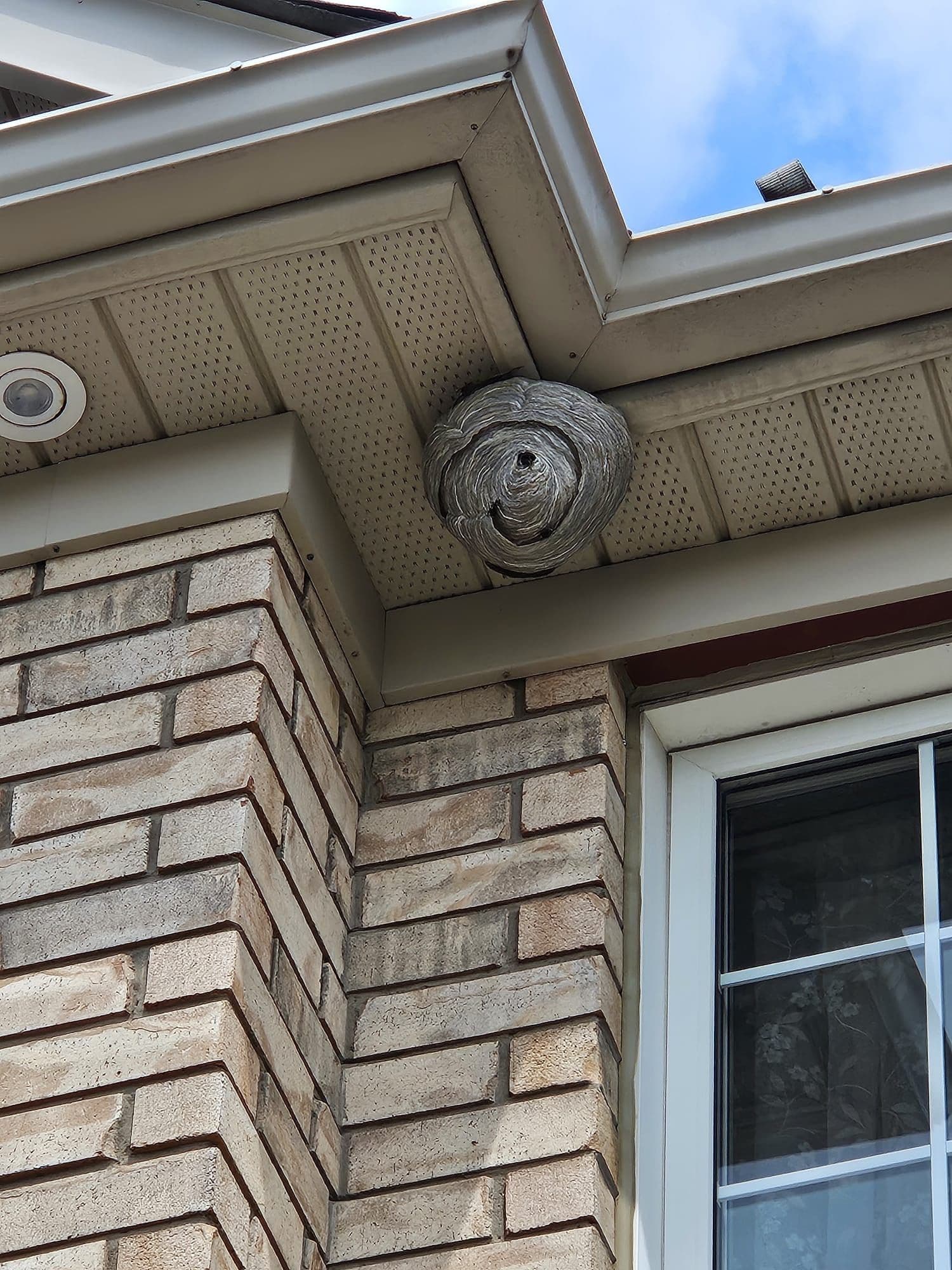
An exposed nest under a low eave is usually simpler to assess than insects disappearing behind siding three storeys up. The visible nest can look dramatic, but access and concealment often affect the quote more than its apparent size.
Sterex uses three practical pricing groups:
- Accessible exterior nest up to 9 ft: starting at $175 + HST. This applies when the nest is exposed, the work area is safe, and treatment and removal are straightforward.
- Nest above 9 ft: often starting at $250 + HST. Ladder positioning, reach, roofline conditions, and the ground below the work area can all change the setup.
- Complex or concealed nest: custom quote. This includes soffits, wall voids, attics, ground nests, rooflines, high-access sites, and commercial properties.
The price should reflect the actual work rather than a generic number given without context. Sterex confirms the nest route, height, working area, and property conditions before finalizing the scope. For a broader comparison of local service pricing, read the Ontario pest control pricing guide.
Factors that change the price
Several details can move a job from the accessible starting rate to a custom quote.
Height and safe access
A nest above a garage door is not automatically difficult, but the technician still needs stable ground, enough ladder clearance, and a safe way to work without routing people underneath. Sloped ground, narrow side yards, fences, overhead obstacles, and roof edges can change the access plan.
Exposed or concealed location
An exposed paper nest gives the technician a visible target and a clear sense of its attachment point. A concealed colony may be behind a soffit, inside a wall, under siding, in an attic route, or below ground. In those situations, insect traffic at the opening is often the best clue to the nest’s location.
Activity around the nest
A nest beside a front door, tenant walkway, loading entrance, patio, playground, or customer queue creates a different safety problem from one in a remote corner of a large yard. The technician may need a larger work zone or a different access time to keep people away from active traffic.
Residential or commercial conditions
Restaurants, retail sites, warehouses, condos, and other managed properties can involve loading areas, garbage zones, public access, staff coordination, or higher rooflines. Sterex provides commercial pest control for those sites and residential pest control for homes and townhomes.
Exposed nests versus concealed nests
An exposed nest is visible from the outside. It may hang beneath an eave, porch ceiling, deck, shed roof, tree branch, or another protected surface. If the nest remains reachable and safe after treatment, Sterex removes it.
A concealed nest sits behind or below a surface. Wasps may enter through one gap, then travel through a soffit, wall cavity, attic route, siding channel, or underground passage. The opening is not necessarily the nest itself. That distinction matters because treating or sealing only the visible gap can leave the active colony untouched.
Do not seal an active soffit, siding, or wall opening before treatment. Blocking the normal route can redirect insects toward another opening, including an indoor space. The technician can explain when activity has stopped and when repair or sealing should happen.
Ground nests also deserve caution. The entrance can be difficult to see in grass, garden beds, or along a walkway, and vibration or foot traffic can disturb the colony before a person realizes the nest is there.
Yellow jackets, paper wasps, hornets, and why identification matters
“Wasp” covers several stinging insects with different nest styles and traffic patterns. You do not need to make a perfect identification before booking, but the details you observe can help.
- Yellow jackets may use ground openings, soffit gaps, wall routes, or other voids. They are also common around garbage, fallen fruit, and outdoor food late in the season.
- Paper wasps often build visible, open-comb nests beneath eaves, railings, porch ceilings, sheds, and other sheltered edges.
- Hornets and related aerial-nesting wasps may build larger enclosed paper nests in trees, shrubs, rooflines, or protected exterior corners.
Species affects where the technician looks and whether the apparent opening leads to a concealed space. Photos are useful, but Sterex will not rely on a distant image alone when the nest route or species is unclear. If the insects could be honey bees or another pollinator, compare the activity with the bee identification guide before treatment is planned.
When DIY wasp removal becomes dangerous
DIY removal becomes riskier when a person must climb, lean, work above shoulder height, approach a hidden entrance, or stand in the insects’ flight path. A store spray also does not make an unsafe ladder position safe. The nest may be farther inside a void than the opening suggests, and a missed application can increase activity around the area.
Health Canada makes the same point in its public guidance on wasps: nest removal can be dangerous, extreme caution is needed, and professional help is recommended. Its pest control tips for wasps also note that treatment is best carried out after nightfall, when wasps are least active.
Professional assessment is the better choice when:
- the nest is high, concealed, below ground, or near a roof edge;
- insects are entering a soffit, siding gap, attic vent, or wall opening;
- people must use a nearby door, deck, patio, walkway, or play area;
- pets, children, tenants, employees, or customers cannot reliably avoid the area;
- the species or exact nest location is uncertain; or
- anyone at the property has a history of serious reactions to insect stings.
Keep sting advice simple and treat severe symptoms as an emergency. Provincial health guidance says trouble breathing, throat tightness, swelling of the tongue or throat, confusion, dizziness, or fainting can be signs of a severe allergic reaction. Call 911 for suspected anaphylaxis. A person who has been prescribed an epinephrine auto-injector should follow their medical action plan and seek emergency care. See HealthLink BC’s insect-sting guidance and Health Canada’s anaphylaxis information for general public-health information. This article does not diagnose or replace medical advice.
What happens during a professional wasp removal visit?
Sterex begins with the property conditions, not a one-size-fits-all treatment. A typical visit includes the following steps.
1. Confirm the active route
The technician watches where insects enter and exit, checks the visible nest or likely void, and confirms whether the issue appears to involve wasps, yellow jackets, hornets, or a possible bee concern.
2. Assess height, access, and nearby activity
The technician considers ladder placement, the surface supporting the nest, doors and windows, pedestrian routes, pets, vehicles, patios, and other conditions that affect a safe work area.
3. Treat the active nest route
Professional equipment and protective gear are used according to the location and nest type. The goal is to address the active route and colony, not to spray unrelated surfaces.
In Ontario, commercial pesticide application is licensed work. The province requires a structural exterminator licence for the technician and an operator licence for the business, under the Pesticides Act and O. Reg. 63/09. You can confirm what those pesticide licences and permits cover before hiring any company.
4. Remove the nest when it is reachable and safe
Sterex removes the nest after treatment when it can be reached safely. Concealed soffit, wall, attic, or ground nests may not be physically accessible. In those cases, the technician explains what to monitor and when sealing or repair can begin.
5. Review prevention and next steps
The final advice should match the property. That may include managing outdoor food waste, repairing a gap after activity stops, or watching a previously active route. No responsible plan should require the customer to guess when to seal an active opening.
What to do before the technician arrives
The best preparation is information and clear access—not disturbing the nest.
- Keep people and pets away from the active area.
- Note where insects enter and exit and when the traffic is most noticeable.
- Take a photo or short video only from a safe distance; do not climb for a closer view.
- Keep gates, side yards, balconies, or service areas accessible when practical.
- Tell Sterex about tenant, staff, customer, or delivery traffic near the nest.
- Do not spray over the route, knock down the nest, or seal an active opening before the visit.
You can include the nest location, approximate height, and a safe-distance photo when you book a wasp assessment. Sterex works across the Toronto and GTA service area, including Brampton and Vaughan, where late-summer soffit and ground-nest calls are the most common.
Wasp prevention for GTA homes and businesses
Prevention works best before a colony is established. In spring and early summer, inspect eaves, railings, sheds, porch ceilings, vents, and exterior gaps from ground level. Small early nests can still be active, so do not handle one simply because it looks small. For the seasonal side of this, see what changes during GTA wasp season.
Reduce food pressure by keeping garbage and compost lids closed, rinsing sugary containers, cleaning outdoor dining surfaces, and removing fallen fruit. Restaurants and commercial sites should pay special attention to patio edges, garbage areas, delivery doors, loading zones, and customer entrances.
After an active void nest has been treated and activity has stopped, repair damaged screens and seal appropriate exterior gaps. Timing matters: preventive sealing is useful, but premature sealing of an active route can create a new problem.
When a nest needs faster attention
A nest deserves prompt professional assessment when normal movement brings people close to it. Front doors, patios, balconies, children’s play areas, pet runs, tenant walkways, customer entrances, outdoor dining areas, and loading doors leave little room to avoid defensive activity.
Until the area is assessed, reroute foot traffic where possible and avoid standing under or beside the entrance. If someone is being stung or shows signs of a severe allergic reaction, move to safety and call 911; pest-control booking is not emergency medical care.
Frequently asked questions
How much does wasp nest removal cost in Toronto?
An accessible exterior nest up to 9 ft starts at $175 + HST. Nests above 9 ft often start at $250 + HST. Soffit, wall-void, attic, ground, roofline, high-access, and commercial nests require a custom quote.
Is nest removal included?
Sterex removes a treated nest when it is reachable and safe to remove. A nest concealed inside a structure or underground may not be physically accessible, so the technician will explain the appropriate aftercare.
Can I seal the hole after I see wasps entering it?
Do not seal an active soffit, siding, or wall opening before treatment. Wait until the active route has been treated and the technician confirms when sealing or repair should happen.
Can a photo confirm the price?
A photo taken from a safe distance can help assess the location, approximate height, and access. It may not show a concealed nest, ladder conditions, or the full work area, so final scope still depends on the property conditions.
Should I remove an old nest?
An inactive, reachable nest may be removable, but do not assume a nest is inactive based on a brief observation. Keep your distance if there is any traffic or uncertainty.
Need help with an active nest?
If wasps are using a repeated route near your home or business, send Sterex the location, approximate height, and a photo taken from a safe distance. Book professional wasp removal or review the wasp service page for current pricing and coverage.
Sources
- Health Canada, Pest control tips: Wasps.
- Government of Ontario, Pesticide licences and permits.
- Health Canada, Pesticide registration process.
