Wasp Season in Toronto: How to Protect Your Home Before They Move In
August is peak wasp season across the GTA. Here is where nests get built, the prevention steps that actually help, and when a nest needs a licensed technician.
By Jitendra PatelFounder of Sterex Pest Control, in GTA pest control since 2006

As August heats up in the Greater Toronto Area, so does wasp activity. This is peak season for wasps in Toronto, Brampton, Vaughan, Mississauga, and surrounding cities. By late summer, wasp colonies are fully grown, defensive, and constantly searching for food sources around homes and businesses. If a nest is already established, the cost and process for wasp nest removal is a better starting point than prevention.
While wasps play a role in controlling other insects, they become a serious problem when they build nests near people. A single nest can house hundreds of wasps, and one wrong move can lead to painful stings or a severe allergic reaction. Health Canada notes that social wasps such as yellow jackets are the most likely to cause trouble around homes, partly because they scavenge in garbage cans. See its pest control tips for wasps for the general public-health picture, and the Sterex wasp guide for what we see across the GTA.
Why Wasps Are Worse in August
- Bigger Colonies – Nests started in spring now contain hundreds or even thousands of workers.
- Food Scarcity – As natural food sources decrease, wasps go after human food, especially sweets and meats.
- Aggressive Behavior – Wasps defend their nests aggressively in late summer, making them risky to remove without proper equipment.
Where Wasps Build Nests in the GTA
Sterex Pest Control frequently finds nests in:
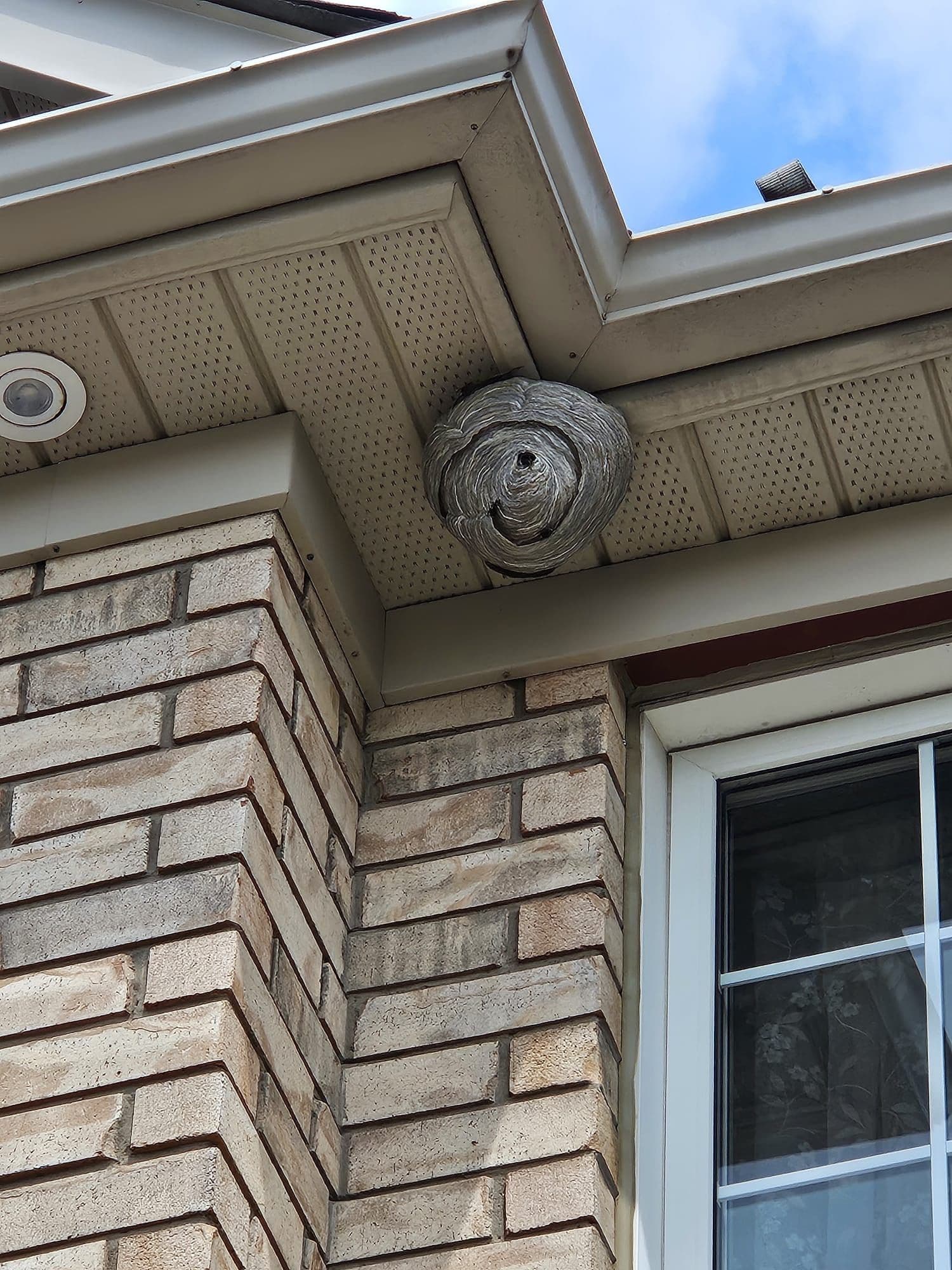
- Roof eaves, soffits, and attics
- Behind siding or shutters
- Trees, bushes, and hedges
- Sheds, decks, and play structures
- Underground burrows in yards and gardens
Knowing these hotspots can help you spot wasp activity before it becomes a bigger problem.
What You Can Do to Prevent Wasps
Homeowners can take simple steps to make their property less attractive to wasps:
Seal entry points – Check siding, soffits, and vents for gaps.
Secure garbage bins – Wasps are drawn to leftover food and sweet liquids.
Pick up fallen fruit – Common in Vaughan, Brampton, and Markham backyards.
Cover food outdoors – Keep drinks and barbecue items closed.
Inspect trees and decks – Check regularly for small nests before they grow.
Why professional removal is usually the safer option
If you find a wasp nest, especially one larger than a golf ball, DIY sprays often don't work and can make wasps more defensive. A professional visit is safer because:
- Licensed technicians can use professional products that are not sold to the general public, applied according to the product label.
- Protective equipment reduces the risk of stings while working close to an active nest.
- A technician confirms the actual nest route before treating, which matters most when wasps are entering a soffit, wall void, or ground opening rather than an exposed nest.
Attempting removal yourself can put you, your family, and pets at risk. Health Canada's guidance is blunt about it: nest removal can be dangerous, and professional help is recommended. In Ontario, that work is licensed — technicians need a structural exterminator licence and the business needs an operator licence under the province's pesticide licensing rules.
Call Sterex Pest Control for Help
If you see wasp activity on your property, don't wait until it gets worse. At Sterex Pest Control, we provide wasp nest removal throughout the GTA. Sterex is owner-operated by Jitendra Patel, who has worked in GTA pest control since 2006.
Call 289-210-7378 or request a quote online. If a nest is near a door, patio, or play area, mention that when you book so we can prioritise the visit.
Prevention is cheapest in spring, before colonies establish. If you are already past that point, the wasp nest removal guide explains what changes the price and what happens during a visit.
Sources
- Health Canada, Pest control tips: Wasps.
- Government of Ontario, Pesticide licences and permits.