
Steam vs. heat for bed bugs: what actually decides whether they come back
By Jitendra Patel · Updated
Sterex uses targeted steam with label-appropriate residual spray and dust across two visits. We do not offer whole-room heat treatment. The choice of method is only one part of the plan. Inspection, access to hiding places, preparation and follow-up also matter. Ask what the quoted service covers and how activity will be assessed after treatment.
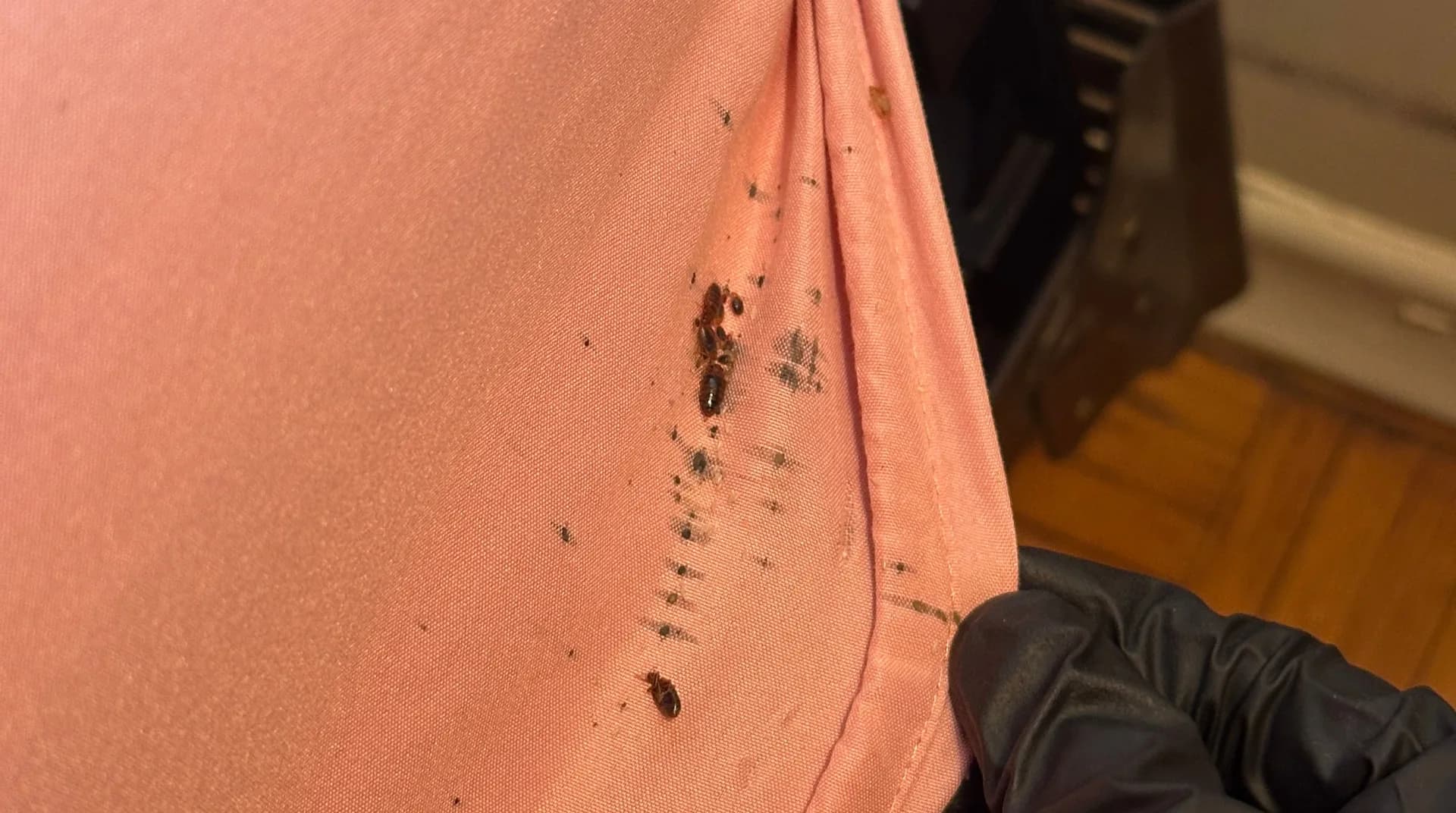
Live adults and fecal staining running along a single piped seam on a box spring — the first place any inspection should go, and rarely the only place they are.
Choosing a service in Vaughan or Richmond Hill
If your search was for bed bug heat treatment, confirm which method the quote includes. Sterex offers targeted steam with residual treatment, not whole-room heat. A detached home in Vaughan and a managed apartment in Richmond Hill can need different access and inspection arrangements, even when both use a two-treatment package.
For one home, list every sleeping area and any room with sightings. For a managed building, give the unit report to management and ask how access and follow-up will be coordinated. Our GTA window-covering example below shows why the report should include activity beyond the bed.
The short comparison
Both approaches kill bed bugs with heat. They differ in how that heat is delivered, what it can reach, and what happens after the technician leaves. Neither leaves a property immune to reintroduction.
| Targeted steam | Whole-room heat | |
|---|---|---|
| How it works | High-temperature steam applied directly to a surface | The whole room is raised to a lethal ambient temperature |
| Kills on contact | Yes, including eggs, where the steam actually lands | Yes, if the lethal temperature is reached and held everywhere |
| Protection afterward | None from steam itself — this is why residual product is applied alongside it | None. Heat leaves nothing behind |
| Main failure mode | A harbourage area the technician never opened | Cold spots — wall voids, dense contents, furniture cores |
| Disruption | Room-by-room; heat-sensitive items handled individually | Whole unit vacated; heat-sensitive items must be removed first |
| Offered by Sterex | Yes — with residual spray and dust | No |
What steam actually reaches
Steam is a contact treatment. Where it lands, it kills adults, nymphs and eggs immediately — and eggs matter, because they are unaffected by most residual products. That makes it the right tool for the surfaces people sleep on, where leaving a chemical residue is not appropriate.
Sterex steams mattresses, mattress seams, bed frames, slats, headboards, sofas and other likely harbourage. The limit is honest and worth stating plainly: steam only treats what the technician can physically reach and open. It does not travel into a wall void, and it does not find a population nobody looked for.
Why we do not offer whole-room heat
Whole-room heat is a legitimate method, and for some properties it is the right one. It is not what Sterex sells, and we would rather say so plainly than take a job on the wrong premise.
Our reasoning is about failure modes. Heat has to reach a lethal temperature everywhere at once, and dense contents, furniture cores and wall voids are exactly where it struggles — which is also exactly where bed bugs go when a room starts warming up. When heat works, it works completely. When it leaves a cold spot, it leaves nothing behind to catch what survived, because heat has no residual effect.
The two-visit steam, spray and dust package is built the other way around: treat the live population on contact, then leave label-appropriate residual product on the routes bed bugs travel, and come back to catch what hatched afterward. If a property has conditions that genuinely call for heat, we will tell you that rather than sell you something else.
The two visits, and what happens in each
Sterex only sells bed bug treatment as a two-visit package with follow-up timing confirmed by the technician, never a single visit. The sequence is deliberate.
- Visit one: steam first, so live bed bugs on mattresses, seams, frames and sofas are killed on contact. Then label-appropriate residual spray on baseboards, cracks, crevices, frame and hard-furniture areas and travel zones. Then dust into voids and cracks.
- Between visits: keep a dated record of activity and contact the technician with concerns. Sightings can occur, but they do not establish the cause or the treatment outcome by themselves.
- Visit two: re-inspection and label-appropriate follow-up treatment. The technician confirms the areas and applications needed.
- The second visit is part of the package. Keep it even if activity has dropped, and report any new sightings or access problems to the technician.
The job that changed how we prep
A property management client under contract handed us a building that had been treated repeatedly by a previous company. It kept coming back. Their question was reasonable: why would ours be any different?
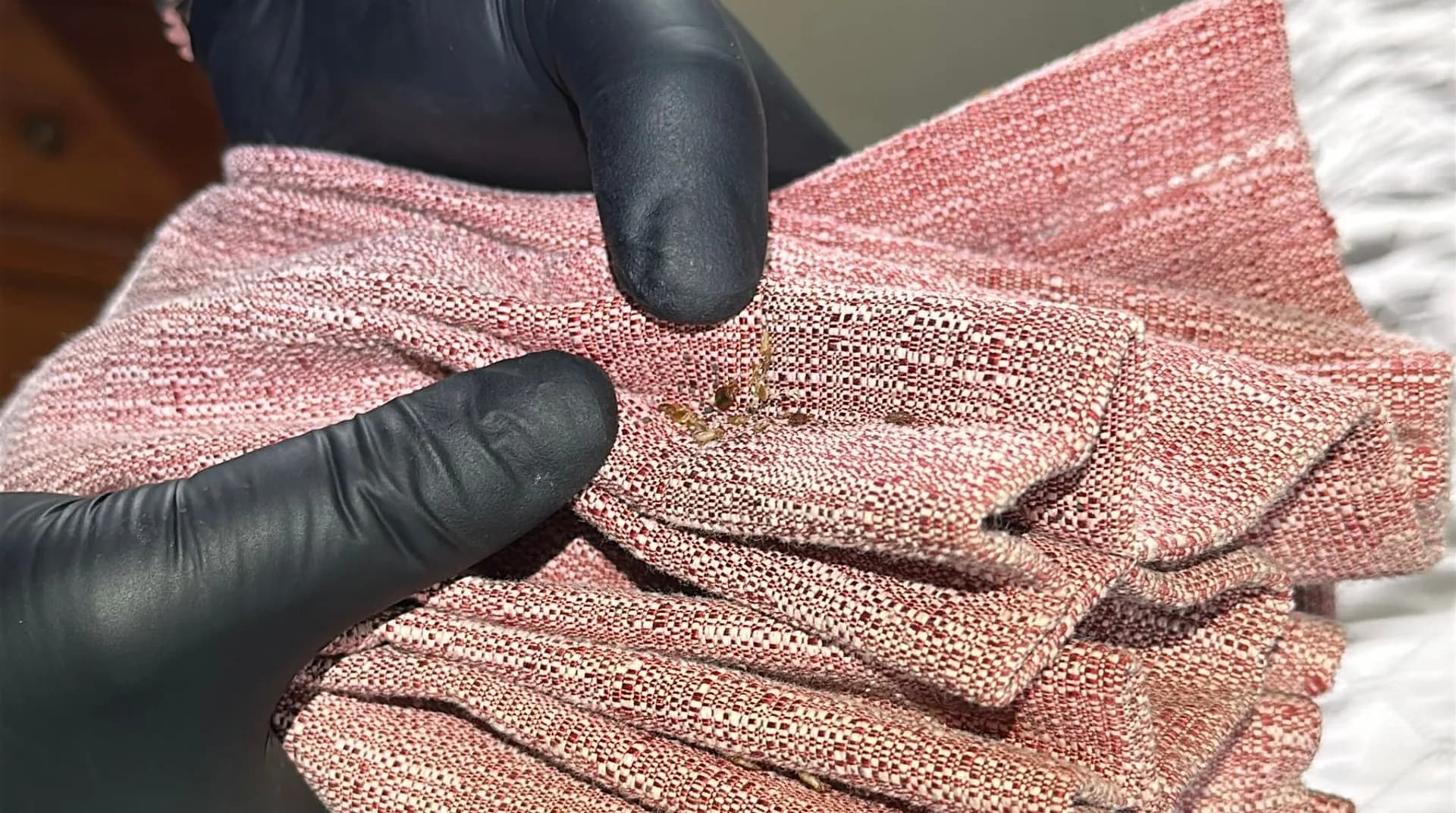
We charged for the prep and did it ourselves rather than leaving it to occupants — and that is where we found the answer. The main population was living in the window blinds. Not the mattress, not the box spring, not the frame. The blinds had never been prepped or sprayed by anyone who had treated that building.
Once the harbourage was open, we ran a full deep treatment. So far so good, though the population was heavy enough that occupants are still reporting bites between visits, and the second treatment is still to come. We will know more at the follow-up inspection, and we will say what we find.
The lesson is not that blinds are always the culprit. It is that a room treated as though bed bugs only live in beds will keep failing, no matter which method is used on the bed.
Where we actually find them
Bed bugs harbour wherever there is a tight seam, a dark fold and access to a sleeping host. In practice that means a lot of places that are not furniture.
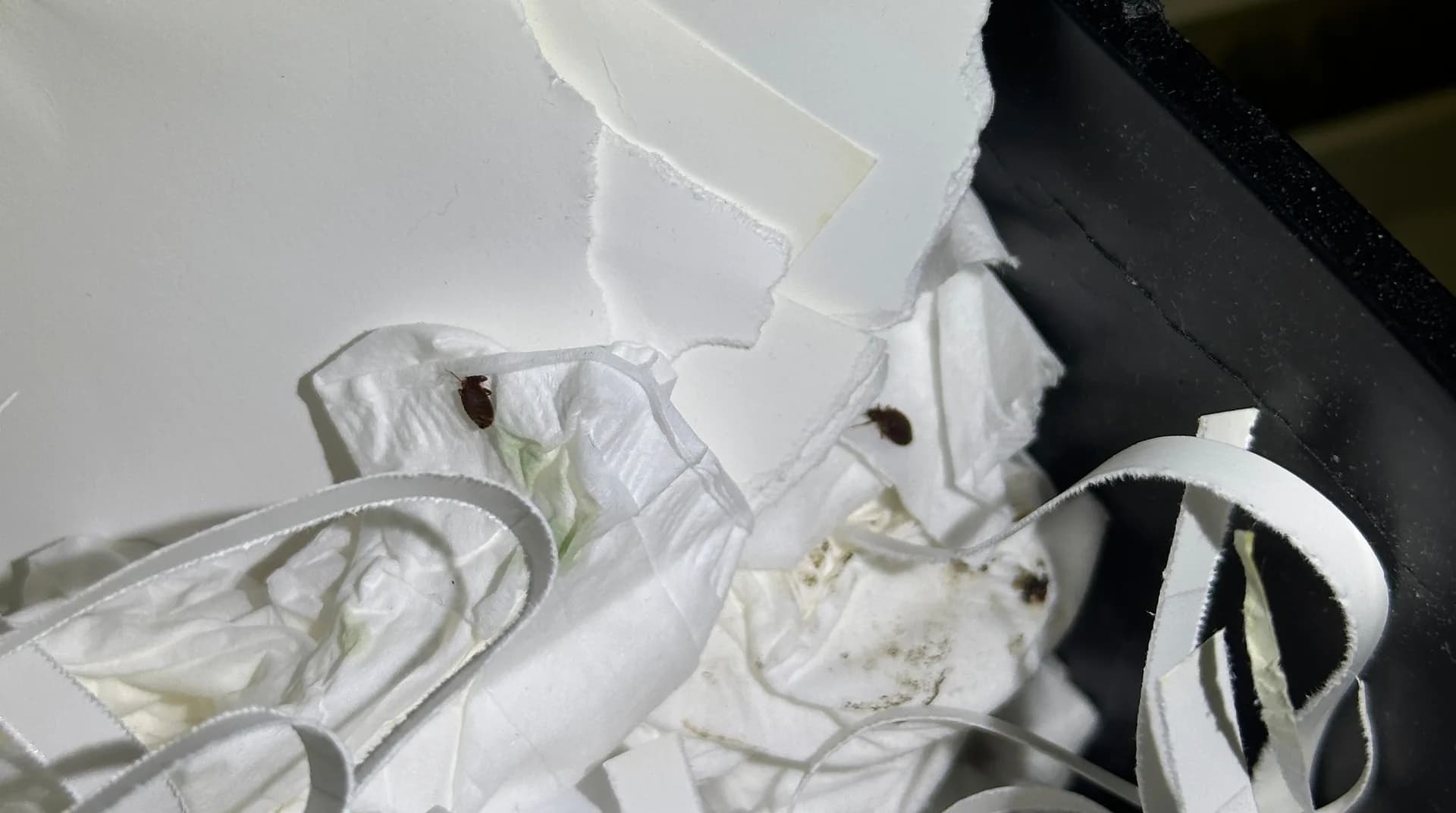
On recent jobs we have pulled live bed bugs out of a paper shredder bin and off bed linen as it came away from the mattress. Both are ordinary, and both are routinely missed — a shredder because nobody thinks of it, linen because it gets bundled up and carried through the home before anyone inspects it.
- Mattress and box spring seams, piping and tags
- Bed frame joints, slats, and the underside of headboards
- Sofa and recliner seams, especially where someone sleeps
- Window coverings — blinds, pleated shades, curtain headers and folds
- Baseboards, and the gap where carpet meets the wall
- Nightstand drawer runners and the backs of wall-mounted fixtures
- Paper — stacked mail, cardboard, shredder bins
- Bed linen and laundry in transit through the home
Handle linen and clothing before you move it, not after
Carrying an armful of infested bedding through a home is one of the easiest ways to turn a one-room problem into a whole-unit problem. Bag it where it lies.
Strip linen directly into a sealed bag in the affected room, carry the sealed bag to the laundry, and wash and dry on the hottest setting the fabric allows — the dryer does most of the work. Do not sort, shake out or pile items in a hallway on the way.
Prep is the variable you control
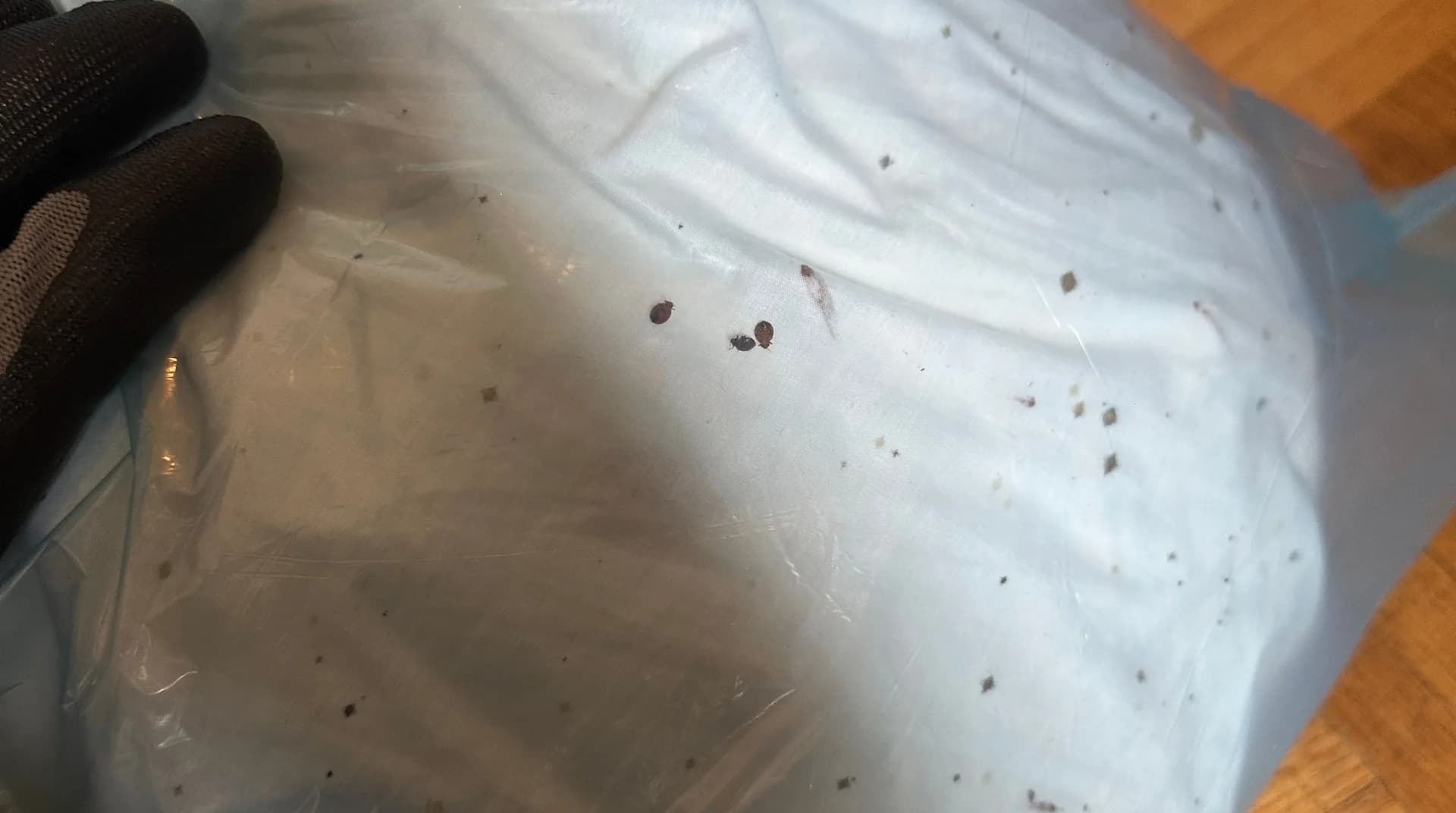
Method is our decision. Prep is yours, and it has more influence on the outcome than the choice between steam and heat.
Better prep means better access, which means steam and product reach the places bed bugs are actually living instead of the places that happened to be easy to get to. Our prep sheet covers the standard steps, and the technician will flag anything specific to your property during inspection.
- Reduce clutter so the technician can reach walls, baseboards and furniture edges
- Launder and dry bedding on the hottest setting the fabric allows
- Pull furniture away from walls where you can do it safely
- Open window coverings for inspection — do not assume they are clear
- Do not throw out furniture before inspection; it usually makes things worse
- Tell the technician every room where anyone has slept, including sofas
If you are in a condo, apartment or rental
In a multi-unit building the unit is not the boundary of the problem. Bed bugs travel through shared walls, along service penetrations, and on people and belongings.
Treating one unit while an adjacent unit goes untreated is a recurring reason infestations return, which is why coordinating with property management matters. Under the Ontario Condominium Act the condominium board is responsible for maintaining the property, and tenants in rental units should notify the landlord, who carries that duty under the Residential Tenancies Act.
Questions worth asking any provider
These separate a considered treatment plan from a quoted price, whichever method a company uses.
- How many visits are included, and is the follow-up part of the package or extra?
- Which surfaces get steam or heat, and which get residual product?
- Will you inspect window coverings, sofas and non-furniture harbourage, or only the bed?
- What are the limits of your method, and when would you tell me it is the wrong fit?
- What does the prep require from me, and what happens if it is incomplete?
- Are your technicians licensed for structural extermination in Ontario?