
Found bed bugs in your apartment? A reporting checklist for GTA tenants and property managers
By Sterex Pest Control Team · Updated
If you suspect bed bugs in a rental apartment, tell your landlord or building manager promptly, photograph any visible evidence, and record where and when you found it. Ask for an inspection and written preparation instructions. You do not need to identify the insect yourself before reporting a concern. A clear report helps the technician decide what to inspect; it does not replace an inspection.
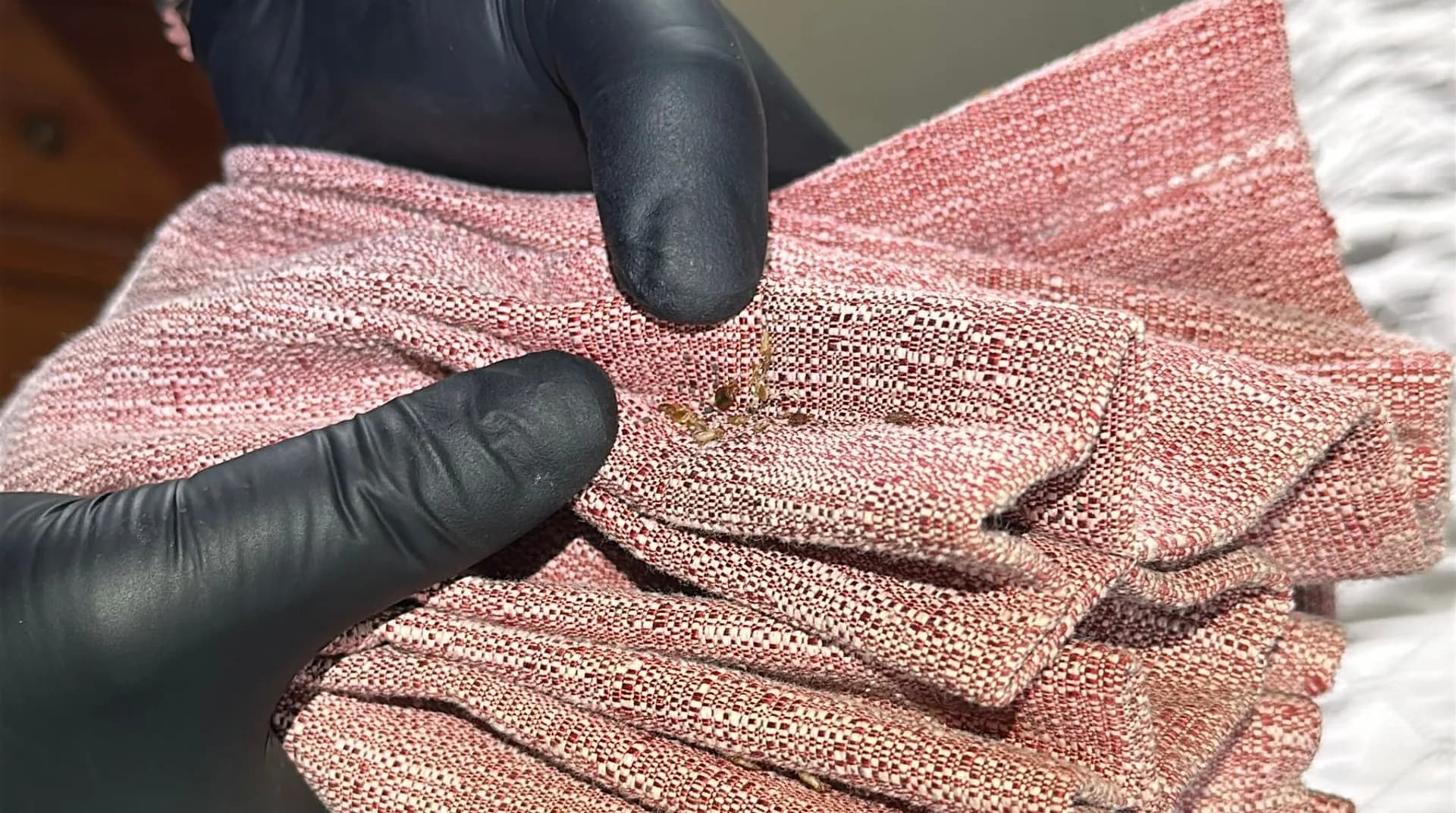
A Sterex field photograph of a window covering. Include the exact object and room in a report: evidence can be away from the mattress.
Start with a useful report, even if you are unsure
A message saying there may be bed bugs is enough to raise the concern. Adding a room, an object and a date makes that message much easier to act on. For example: ‘On October 9, I found a small insect at the seam of the bedroom mattress. I have attached a close-up and a wider photo showing the seam.’
Describe what you saw without guessing the source or blaming a neighbour. Keep the report in a private email or your building’s maintenance system so you can refer to it later. Do not post another resident’s unit number or photographs of their belongings in a public building group.
Health Canada recommends notifying the landlord right away when a tenant has bed bugs. The reporting steps below are a practical handoff between the resident, manager and pest professional; they are not a determination of who pays or a substitute for the building’s access procedures.
What to include in the first message
Use this checklist to keep the report short and specific. If a detail is unknown, write ‘unknown’ rather than delaying the report.
- Building address and unit number, shared privately with management or the technician.
- Your preferred contact method and times you can discuss inspection access.
- Date of the sighting and the room where it occurred.
- Exact location: mattress seam, frame joint, sofa cushion, window covering or another object.
- What was visible: an insect, shed skin, spotting or other evidence. Attach photographs if available.
- Other rooms or sleeping areas where you have noticed activity.
- Any recent pest treatment, including its date and instructions if you have them.
- Any support needed to prepare or provide access, such as help moving heavy items or understanding instructions.
Take two photographs: the evidence and its location
Take a close-up in good light, then a wider photograph that shows where the evidence sits. The second image can be as useful as the first: a tiny mark without room context gives the technician less to work with. Keep the original files so details are not lost through repeated screenshots.
Photograph what is safely visible. Do not dismantle electrical fittings, reach into inaccessible spaces or move heavy furniture just to obtain a picture. If the image is blurry, say so. A photograph can help with an initial assessment, but an unclear image should not become a confident identification.
The window-covering photograph above is already part of Sterex’s field-photo library. It illustrates why ‘in the bedroom’ is less useful than ‘inside the pleats of the bedroom window covering’. It does not establish that another home has the same hiding place or needs the same treatment.
A copy-and-send message for your building manager
Subject: Possible bed bug activity — inspection request for unit [number]
Hello [name], I am reporting possible bed bug activity at [address and unit]. I noticed [describe evidence] on [date] in [room and exact location]. I have attached [number] photographs. Other affected areas I have noticed are [areas, or unknown]. Previous treatment took place on [date, or none/unknown].
Please confirm receipt, the next step for inspection, and any written preparation or access instructions. I may need help with [preparation or access issue, if applicable]. My preferred contact is [contact detail]. Thank you.
For property managers: keep one record through the follow-up
A simple incident record prevents the resident’s first report from becoming disconnected from the technician’s findings. Assign a contact responsible for the next action and keep the inspection notes with the original report. The table below is a suggested workflow, not a statement of legal deadlines.
Keep reported activity separate from confirmed findings. An absence of new messages is not a documented inspection result. If a resident reports activity again, add the new date and location to the record so the technician can compare it with the previous visit.
For buildings covered by RentSafeTO, Toronto publishes specific pest-management and tenant-notification requirements. Check the City’s current guidance linked below. Toronto’s program should not be presented as the rule for every building elsewhere in the GTA.
| Stage | Record | Next action |
|---|---|---|
| Report received | Date, unit, reported location and resident contact | Acknowledge the report and arrange the next step |
| Inspection arranged | Appointment, access arrangements and preparation instructions | Confirm that the resident has the instructions and can follow them |
| Inspection completed | Technician’s findings and recommended scope | Ask whether any additional areas need inspection |
| Service planned | Written scope, preparation needs and follow-up arrangements | Resolve access or preparation obstacles before the visit |
| Follow-up | New sightings by date and location, plus technician’s assessment | Record the next action rather than assuming the issue is resolved |
Get the preparation instructions before reorganizing the room
Ask the pest professional for the preparation sheet that matches the planned service. Health Canada explains that preparation can include organizing belongings, bagging items, laundering and making furniture accessible. The specific instructions should come from the pest professional.
Tell the technician about any practical obstacle before the appointment. A resident who cannot move a bed, read the instructions or access laundry needs a workable plan. A written checklist is only useful if the person receiving it can complete the steps.
Sterex’s preparation page and bed bug service page are linked below. Use those for the current service instructions rather than treating this reporting checklist as a treatment protocol. For method questions, the steam-versus-heat article explains the distinction between targeted steam and whole-room heat.
Arrange an assessment in Toronto and the GTA
Sterex Pest Control is based in Brampton and serves Toronto and the GTA. When requesting an assessment, include whether the property is a home, condo or apartment building, how many rooms have reported activity, and whether a building manager is coordinating access.
Residents can use the booking page for a callback request. Managers coordinating multiple units can use the property-management service page to outline the building’s needs. Sending a request starts the conversation; the inspection and agreed scope determine the work.