
Carpenter Ants in Toronto and the GTA: Identification, Damage, and Treatment
What carpenter-ant clues mean, what to record before an inspection, and what Sterex’s $350 plus HST residential service covers.
By Jitendra PatelFounder of Sterex Pest Control, in GTA pest control since 2006
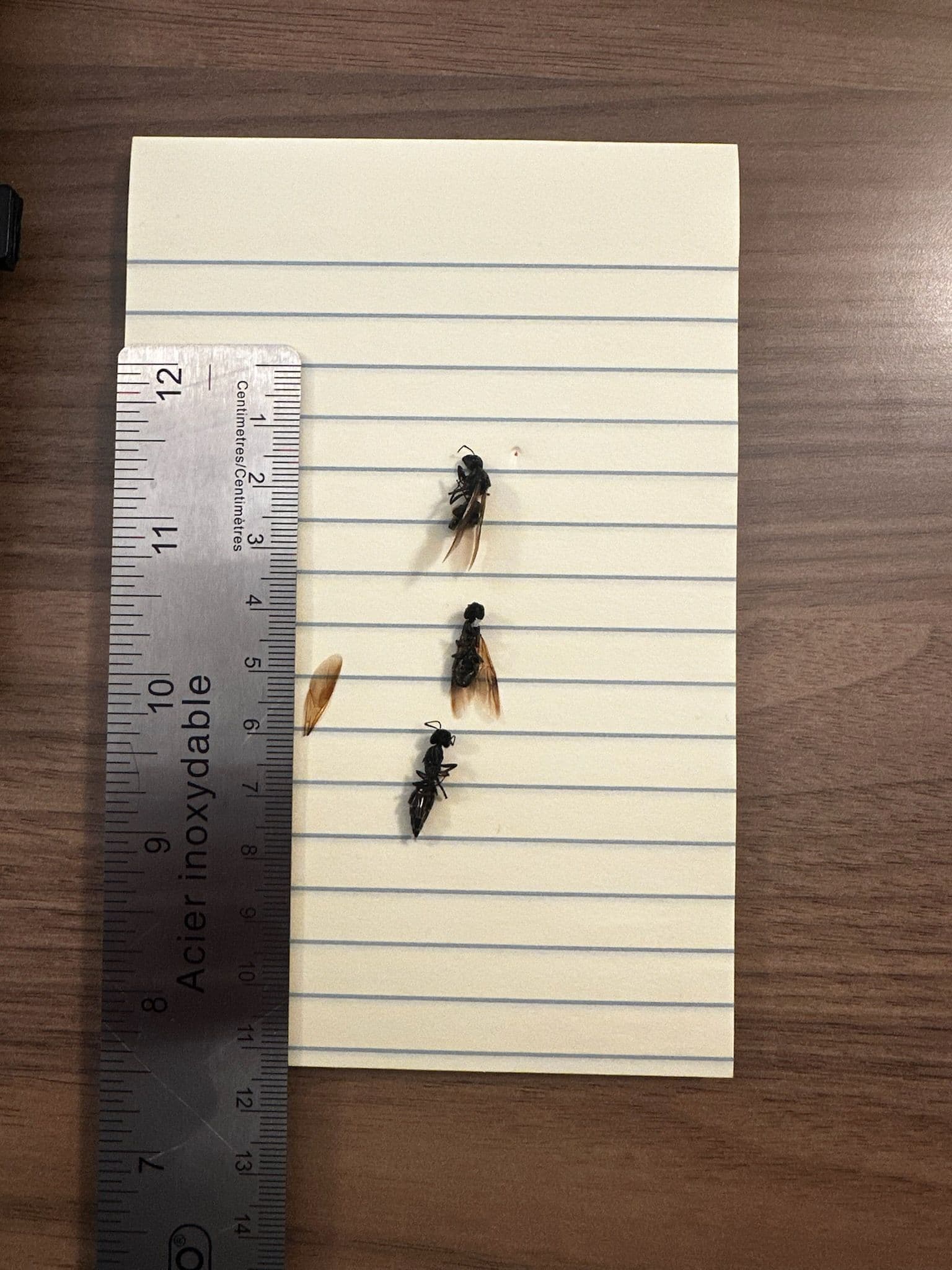
Carpenter ants in a Toronto or GTA home need identification before treatment. A large ant, a pile of debris or a winged insect is a useful inspection clue, but none identifies the pest on its own. Sterex's residential carpenter-ant spray service is $350 plus HST. Confirm the species, accessible treatment areas and preparation instructions before booking.
How to identify carpenter ants
Carpenter ants excavate wood to make nesting space; they do not eat it. They are generally larger than many common household ants, but colour and size alone are unreliable. A clear photograph or collected specimen helps a technician distinguish them from other ants and from termites.
Health Canada describes coarse sawdust-like debris, activity around damp wood and repeated ant sightings as clues worth investigating. These clues do not establish the extent of damage. If timber looks weakened, arrange an appropriate building assessment as well as pest identification.
See Health Canada's carpenter-ant guidance for identification and prevention information, and the Sterex ant-control page for help distinguishing service options.
What to record before an inspection
A short record makes the initial conversation more useful than a guess about where the nest must be. Use the same room names in your notes and photographs so someone unfamiliar with the property can follow them.
- Photograph the insect from above and from the side, with a size reference if practical. Keep the original image rather than only a compressed screenshot.
- Record the date, room and exact surface where you saw activity. Note whether ants appeared once or on several days.
- Photograph debris before cleaning it away. Include a wider photograph showing the window, door, baseboard or other surrounding area.
- Tell the technician about leaks, condensation, recent water damage, repairs and any inaccessible areas. Describe what you know without opening walls or disturbing electrical fittings.
- List any products already applied, where they were used and when. Keep the packaging or product name available.
What does carpenter-ant treatment cost in Toronto?
Sterex's confirmed residential price is $350 plus HST for carpenter-ant spray treatment. A carpenter-ant service is different from the $250 pharaoh-ant bait program. Do not choose a treatment by price before the species is identified.
Ask for written confirmation of the treatment area, any access limitations, preparation, re-entry instructions and follow-up terms for your property. The price alone does not establish that concealed spaces can be reached or that building repairs are included. Commercial properties need a separately scoped quote.
The Ontario pest-control pricing guide separates residential services from commercial programs. You can request a callback with your photographs, property type and sighting record.
What to expect from the service conversation
First, explain what you have seen and ask whether the evidence supports carpenter ants or whether an inspection is needed to identify them. Next, discuss where activity occurs, which areas can be accessed and whether moisture or repair issues need separate attention. Finally, confirm the proposed treatment and the instructions specific to the products and areas involved.
Do not assume that every carpenter-ant job uses the same product, equipment or application pattern. The technician must determine the appropriate scope. Sterex's published residential service is a spray treatment. Ask the technician to explain the proposed applications and any limits on access before proceeding.
Review the preparation page, then follow the instructions supplied for your own appointment. Tell the team about occupants, pets and access constraints before the visit so they can explain the applicable precautions.
Moisture and maintenance matter too
Repairing leaks, keeping wood dry and reducing wood-to-soil contact can help make a property less suitable for carpenter ants. Keep firewood away from the building and inspect vulnerable wood around damaged windows, doors and roof areas. Pest treatment does not repair deteriorated timber or resolve a water leak.
Make a separate maintenance list with the location, a photograph and who will handle each item. In a rented or managed property, share that list with the person responsible for repairs rather than assuming the pest-control appointment covers the work.
Questions after treatment
Does one ant mean the treatment failed?
A sighting alone cannot answer that. Record where and when it occurred, photograph it if possible and contact the technician with the update. Ask what activity should trigger a reassessment for your specific service; avoid judging the result against a generic online deadline.
Can I add a store-bought spray?
Ask the treating technician before adding another product. Explain what you intend to use and where, and follow all applicable label directions. Do not mix products or improvise applications inside inaccessible building spaces.
Do you serve Vaughan and Richmond Hill?
Yes. See our existing Vaughan service page and Richmond Hill service page, or contact Sterex to confirm availability and the scope for your address. The identification and inspection process matters more than a city-specific treatment label.